Wall-Mounted Bathroom Faucet Guide: Plan, Style, Clean
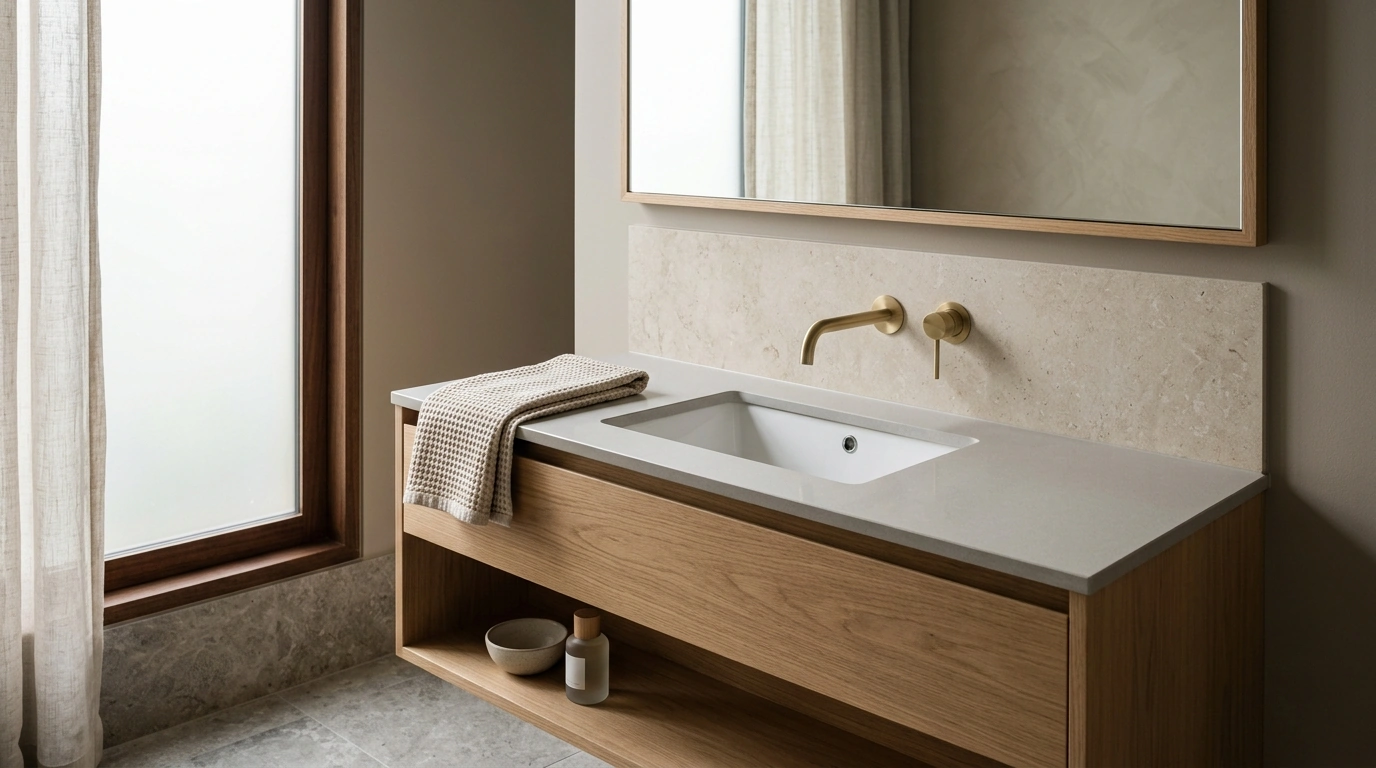
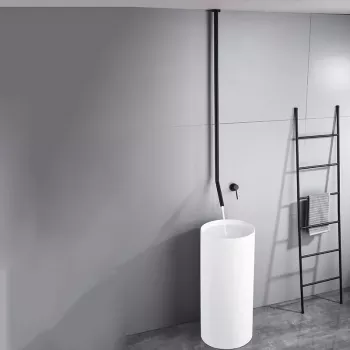
Elegant Hanging Bathroom Faucet: A Cleaner Counterline, A Calmer Routine
A bathroom feels instantly more intentional when the faucet becomes part of the architecture—not another object competing for space. Our team designed the Elegant Hanging Bathroom Faucet for vanities that prioritize open surfaces, easier wipe-downs, and a refined, modern silhouette. Below, we’ll walk through where a wall-mounted faucet shines, what to measure before the wall is closed, and how to style the whole vanity wall so it feels effortless every day.
Why a hanging (wall-mounted) faucet changes the whole vanity
When the spout comes from the wall instead of the countertop, the vanity reads calmer right away. You get a more continuous countertop line, fewer crevices around a faucet base, and a layout that feels considered instead of crowded.
- Creates visual quiet: the counter reads as one continuous surface, which can make small bathrooms feel larger and spa-like spaces feel more gallery-clean.
- Reduces clutter zones around the base—fewer seams where water spots, toothpaste residue, and makeup dust collect.
- Improves wipe-down speed: cleaning the counter becomes a single pass instead of detailing around hardware.
- Pairs beautifully with vessel and undermount sinks when spout reach and height are planned correctly.
- Highlights statement materials (stone, terrazzo, microcement, solid surface) by keeping hardware off the deck.
Quick comparison: hanging faucet vs deck-mounted faucet
| Detail | Hanging faucet (wall-mounted) | Deck-mounted faucet |
|---|---|---|
| Countertop look | Open, minimal, architectural | More hardware presence on the surface |
| Cleaning around faucet | Simpler counter wipe-down | More edges and base area to detail-clean |
| Plumbing access | Typically behind the wall; plan ahead | Often accessible under the sink |
| Sink pairing flexibility | Great for vessel or wide basins (with correct reach) | Works broadly; less planning required |
| Best for | Design-forward vanities and tight counters | Quick replacements and straightforward installs |
Where it fits best: layouts that benefit most
Wall-mounting is especially satisfying in rooms where every inch has to work hard—or where you want the vanity wall to feel like a composed “moment,” not a pile-up of necessities.
- Powder rooms: a hanging faucet delivers a boutique finish without expanding the footprint.
- Small primary baths: you reclaim counter space for daily essentials without crowding the basin.
- Double vanities: each station feels less busy, especially with a shared stone slab.
- Vessel sinks: keeping the deck clear prevents the “tower of hardware” look behind the bowl.
- Floating vanities: fewer objects on the top reinforces that light, modern effect.
Planning the details that make it feel custom
The difference between “designer-clean” and “slightly off” is almost always measurement and placement. Because the rough-in happens before the wall is finished, it’s worth slowing down here.
- Spout reach: measure from the finished wall to the sink’s drain center; aim for the stream to land close to the drain without splashing the rim.
- Spout height: confirm comfortable clearance above the basin (especially with vessel sinks) while keeping the stream controlled.
- Handle placement: keep handles easy to grab without bumping a backsplash return, mirror frame, or side shelving.
- Backsplash and wall finish: tile, slab stone, and microcement can all work—choose a surface that still looks good with occasional water spots.
- Mirror and lighting alignment: a centered faucet line (relative to the sink and mirror) reads intentional at a glance.
- Future-proofing: if your layout allows, plan practical service access—clean design should stay livable long-term.
Pre-install checklist (measure before the wall is closed)
| What to confirm | Why it matters |
|---|---|
| Sink type and dimensions | Determines spout height and reach for splash control |
| Drain centerline location | Helps place the spout so the stream hits the right zone |
| Vanity depth | Prevents the stream from landing too close to the front edge |
| Wall build-up (tile + backer + waterproofing) | Affects final faucet projection and alignment |
| Clearance to mirror and shelving | Avoids crowding and keeps the elevation clean |
If you want added reassurance around efficiency and responsible water use, it’s worth reviewing guidance from the U.S. Environmental Protection Agency (EPA) WaterSense program. For plumbing best practices and planning considerations, the American Society of Plumbing Engineers (ASPE) is a helpful reference point.
Styling ideas: how to make the faucet look intentional, not improvised
Care and everyday upkeep
A curated way to complete the upgrade
- Start with the anchor piece: the Elegant Hanging Bathroom Faucet sets a clean, floating tone that naturally guides the rest of the vanity decisions.
- Then refine the surrounding zones: towel placement, storage, and countertop editing make the “new faucet” feel like a full reset, not a single swap. If you’re redesigning a tight bath, our team also recommends the Maximize Function, Minimize Clutter | Multifunctional Room Layouts eBook for practical layout moves that reduce daily friction.
- Keep progress simple and visible: if you’re coordinating several small changes at once, One Room, Real Progress: A Simple Step-by-Step Guide for Stress-Free Home Organization helps you sequence decisions so your bathroom stays usable while you upgrade.
FAQ
Does a hanging bathroom faucet work with any sink?
It works with many sink types, but the fit depends on matching spout reach and height to your basin depth and drain position. Vessel and undermount sinks are common pairings, and accurate measuring before installation is what prevents splashing and awkward placement.
Is a wall-mounted faucet harder to install than a deck-mounted faucet?
It typically requires in-wall plumbing planning and precise rough-in placement before the wall is finished, so many homeowners use a professional installer. After installation, day-to-day use feels just as straightforward as any other faucet.
How do you keep a wall-mounted faucet area looking clean?
A quick wipe after heavy use helps prevent spots, and gentle soap-and-water cleaning preserves the finish. Keeping the counter edited and maintaining grout or sealants on the wall surface also keeps the whole zone looking sharp.





Leave a comment