Natural Gas Tankless Water Heater: Size, Install, Save
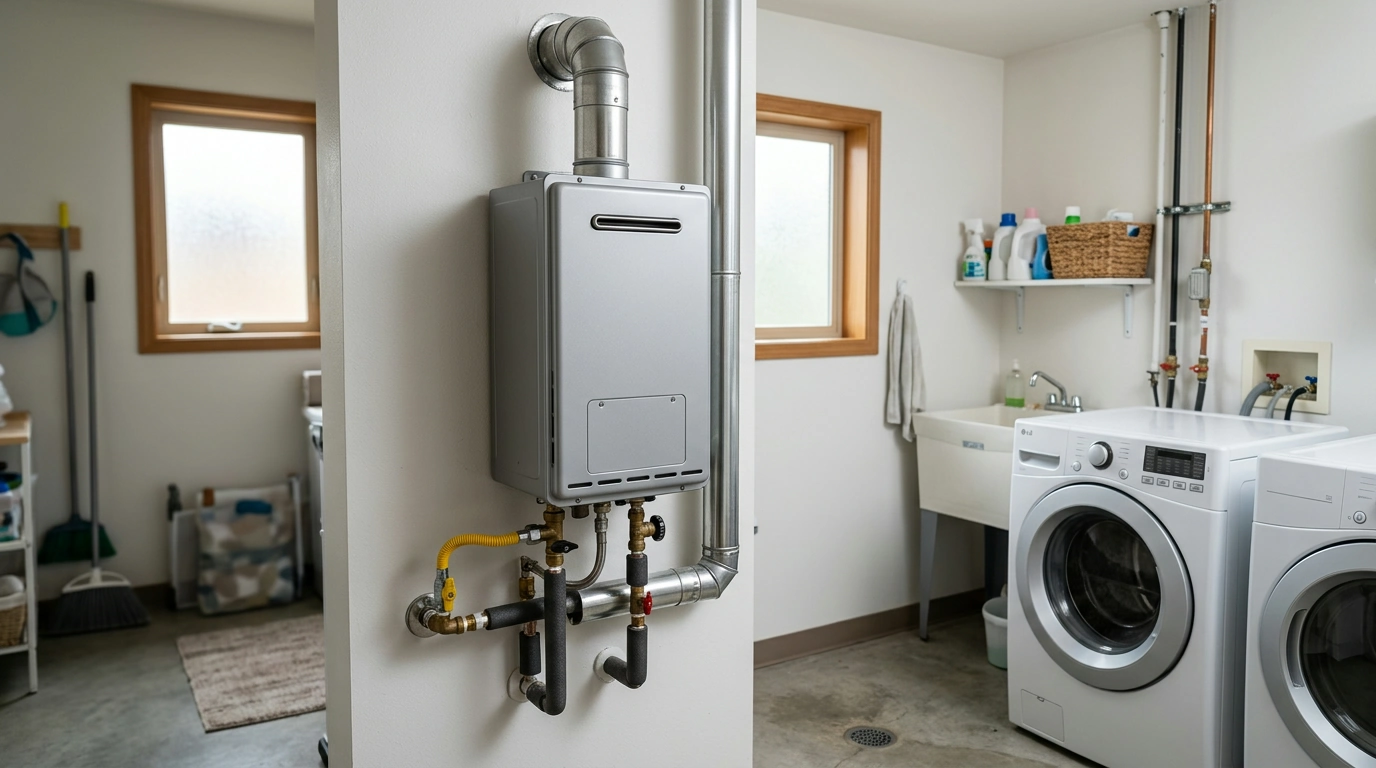
Natural Gas Tankless Water Heater: Instant Hot Water Without a Storage Tank
A natural gas tankless water heater is built for homes that want steady hot water on demand—without paying to keep a full tank hot all day. Instead of storing gallons of heated water, it heats water as it flows through the unit. The result is a space-saving upgrade that can support back-to-back showers and everyday household routines when it’s sized and installed correctly. For more guidance, see Water heaters’ methane leaks are high, but fixable.
What “tankless” changes in everyday use
Tankless changes your hot-water routine in a practical way: the heater runs only when you open a hot tap. That means you’re not reheating stored water around the clock, and you’re not limited by a tank’s “recovery time” after a long shower. For further reading, see Actual Savings and Performance of Natural Gas Tankless ….
- Hot water is produced when a hot tap is opened, so the heater runs only when needed.
- No storage tank means less standby heat loss compared with traditional tank-style heaters.
- Performance depends on two practical numbers: flow rate (gallons per minute) and temperature rise (how much the unit must heat incoming water).
- Best results come from matching the heater’s capacity to simultaneous demand (for example: shower + laundry) rather than a single fixture.
Why natural gas is a strong match for tankless heating
Natural gas tankless units are popular in busy households because they can deliver strong heating output, especially when incoming water is cold. When you’re trying to raise water temperature quickly while maintaining usable flow, that extra heating power matters.
- Natural gas models typically deliver higher heating power than many electric tankless units, which helps when incoming water is cold.
- A gas supply line and proper venting are required; planning these details early prevents surprises during installation.
- For many households, gas tankless can be a practical balance of strong output and efficient operation—especially for multiple bathrooms.
Sizing a tankless unit: flow rate + temperature rise
To size a tankless water heater, focus on your busiest hot-water “moment,” not your average day. Think: a shower running while someone else starts laundry, or a kitchen faucet used during dishes. Add up the flow rates for fixtures you expect to run at the same time, then consider how much the unit needs to heat your incoming groundwater.
- Start by listing fixtures that may run at the same time (showers, faucets, dishwasher, washing machine).
- Add up estimated flow rates for those fixtures to get a target GPM for your household’s peak usage window.
- Estimate temperature rise: desired hot water temperature minus incoming groundwater temperature; colder climates require more heating capacity.
- If the home frequently runs multiple fixtures at once, prioritize a larger capacity unit or consider usage scheduling (for example, avoid laundry during shower time).
| Common fixture | Typical flow (GPM) | Notes |
|---|---|---|
| Shower | 1.5–2.5 | Varies by showerhead and pressure |
| Bathroom faucet | 0.5–1.5 | Often lower with aerators |
| Kitchen faucet | 1.0–2.2 | Higher when filling pots/sinks |
| Dishwasher | 1.0–2.0 | Intermittent draw during cycles |
| Clothes washer | 1.5–3.0 | Intermittent draw; depends on model |
Quick sizing worksheet (estimate your peak hot-water demand)
| Simultaneous use | Estimated flow (GPM) | Count | Subtotal (GPM) |
|---|---|---|---|
| Shower | 2.0 | 1 | 2.0 |
| Bathroom faucet | 1.0 | 1 | 1.0 |
| Kitchen faucet | 1.5 | 0–1 | 0–1.5 |
| Dishwasher or clothes washer (intermittent) | 1.5 | 0–1 | 0–1.5 |
Installation essentials to plan before ordering
Tankless performance is only as good as the supporting setup. Before you commit, plan for gas capacity, safe venting, and service access. Our team recommends confirming these basics with licensed pros early—especially in older homes where existing lines and vent routes may not match modern requirements.
| Item | Why it matters | Who to confirm with |
|---|---|---|
| Gas line capacity | Prevents performance issues and unsafe operation | Licensed plumber/HVAC |
| Venting route and material | Ensures safe exhaust and code compliance | Licensed installer/inspector |
| Service valves | Enables descaling/flushing without hassle | Installer |
| Electrical outlet | Supports ignition and control board | Electrician/installer |
| Water hardness info | Determines maintenance frequency | Homeowner/utility report |
Operating costs, comfort, and maintenance habits
For background on how demand-type heaters work and where savings typically come from, you can also reference the U.S. Department of Energy’s tankless water heater guidance and ENERGY STAR’s water heater resources. For fuel gas safety and code context, see the NFPA 54 Fuel Gas Code overview.
Where a natural gas tankless water heater fits best at home
Product picks from our store (in stock)
- Natural Gas Tankless Water Heater — in stock — $1033.49
- Maximize Function, Minimize Clutter | Multifunctional Room Layouts eBook — in stock — $20.99
- One Room, Real Progress: A Simple Step-by-Step Guide for Stress-Free Home Organization — in stock — $7.99
FAQ
How do you size a natural gas tankless water heater for a household?
Add up the flow rates (GPM) of the fixtures you expect to run at the same time, then factor in the temperature rise needed based on your incoming groundwater temperature. Choose a unit that covers your busiest routines, and have a licensed installer confirm gas line capacity and venting requirements.
Does a tankless water heater run out of hot water?
It doesn’t run out the way a tank does, because it isn’t storing a limited volume of hot water. However, if your simultaneous demand exceeds the unit’s flow capacity, you can notice cooler water or temperature fluctuation until demand drops.
How often should a gas tankless water heater be flushed or descaled?
Many households flush and descale about once a year, but hard water can require more frequent service. Follow the manufacturer’s maintenance schedule, and use service valves so flushing can be done efficiently.



Leave a comment