Modern Brass Waterfall Basin Faucet (Deck-Mount, Single Handle)
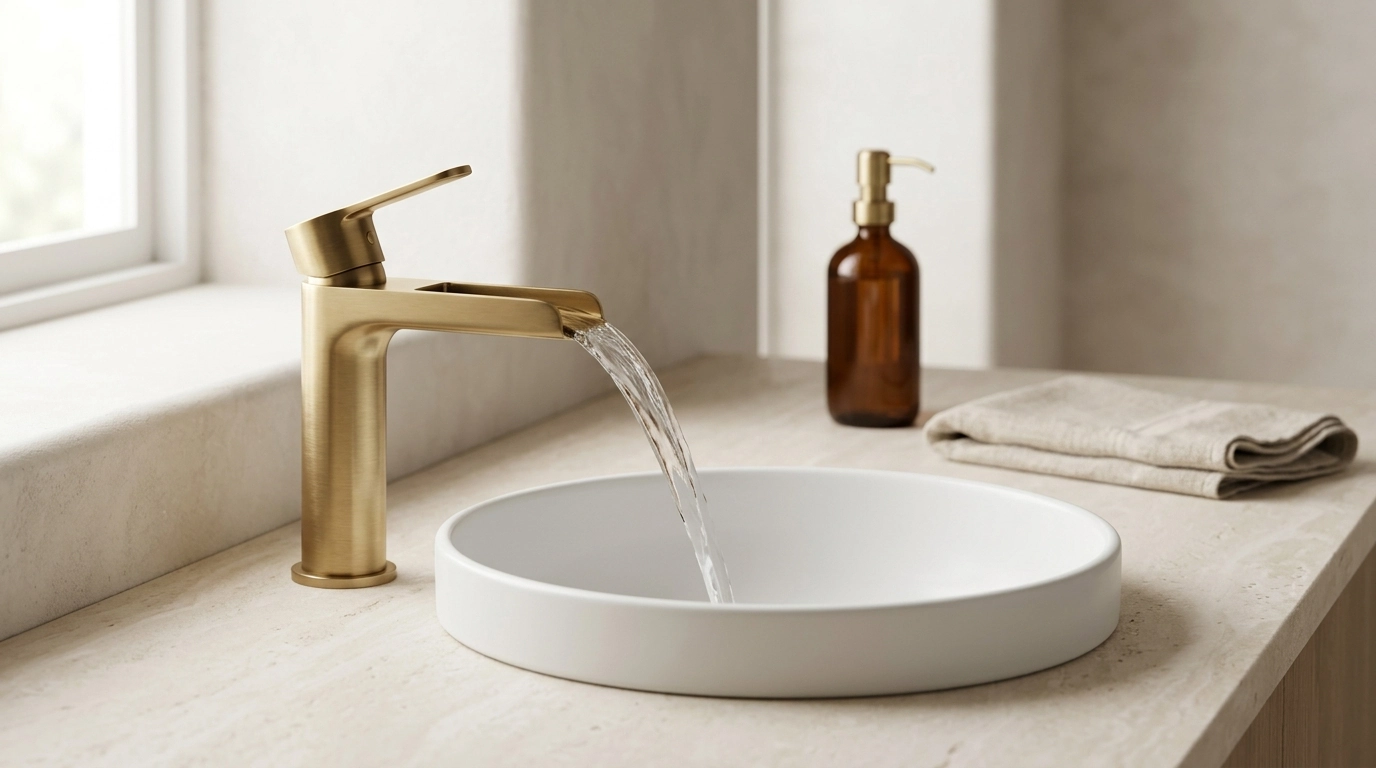
Deck Mounted Brass Waterfall Basin Faucet with Single Handle
A bathroom update feels instantly more finished when the faucet matches the mood of the space: clean lines, confident materials, and a flow that looks as good as it performs. Our Deck Mounted Brass Waterfall Basin Faucet with Single Handle brings that calm, spa-like waterfall stream to everyday routines—without complicating installation or cluttering the countertop. It’s designed for countertop or vanity-mounted basins where a sleek, modern silhouette and simple one-handle control make the sink area feel intentional and easy to use.
Why a waterfall spout changes the feel of the sink area
A waterfall-style outlet produces a wide, laminar sheet of water. Visually, that reads crisp and modern—an easy way to upgrade a basic basin without redesigning the whole vanity. Because the water “presents” itself as a clean plane, quick rinses feel more deliberate, which is exactly what most of us want in the morning and at night: a routine that feels calmer and less rushed.
This look pairs especially well with vessel basins and contemporary sink shapes, where the faucet becomes a design feature rather than background hardware. To keep the countertop balanced, our team recommends minimal styling: one slim soap tray, one canister, and clear counter edges so the waterfall profile stays the focal point.
Brass build + single-handle control: practical upgrades that last
For wet zones, brass has earned its reputation as a dependable material choice. It’s a practical “install it and use it daily” upgrade, especially in bathrooms that see frequent hand-washing and constant on/off cycles.
The single-handle layout keeps operation straightforward: one control for both temperature and flow. That’s less visual noise on the sink deck and fewer movements when your hands are soapy or you’re juggling a fast routine. In smaller bathrooms where the vanity is always in view, the clean handle profile also helps the whole space feel less busy.
Fit check before ordering: sink, countertop, and connection basics
Deck-mounted faucets install through the sink ledge or countertop. That’s great for most standard vanity setups, but it does mean a quick compatibility check before you commit—especially if you’re swapping out an older faucet.
| What to confirm | Why it matters | Quick tip |
|---|---|---|
| Mounting type: deck-mounted | Ensures the faucet matches your sink/countertop installation style | If your current faucet comes from the wall, plan for a different rough-in or choose a wall-mounted model |
| Hole count and placement | Prevents gaps or mismatched installs | Count existing holes and measure spacing before removing the old faucet |
| Clearance behind the faucet | Avoids handle interference with backsplash or wall | Leave enough room for full handle motion and easy cleaning |
| Water supply connections and shutoff valves | Makes installation and servicing easier | Check valve condition; replace worn valves during a refresh if needed |
| Drain and splash considerations | Helps keep water inside the basin | Center the spout over the drain line and avoid aiming the sheet stream at the rim |
Two practical measurements make the biggest difference: the space behind the basin (so the handle can move freely), and the spout’s alignment over the drain line (so the waterfall sheet lands where it should). If shutoff valves under the sink are hard to reach or look worn, taking care of them during the faucet swap can prevent an easy update from turning into a future headache.
Daily use: getting the cleanest waterfall stream (without the mess)
Waterfall faucets look their best when the stream is centered and calm. Aim the flow toward the basin’s drain line rather than the rim; that reduces splash and keeps the counter drier. For vessel sinks, spout reach and height matter even more—proper alignment is the difference between “spa-like” and “why is my mirror speckled?”
If you’re interested in water-saving best practices for the bathroom overall, the EPA’s WaterSense program is a solid, practical reference point for reducing waste without sacrificing comfort.
Care and maintenance for brass bathroom fixtures
Because waterfall outlets depend on a smooth, even path for the sheet stream, mineral buildup can show up as a disrupted flow. If the stream starts to look uneven, check for deposits around the outlet and clean gently. For household water safety basics and hygiene guidance, the CDC’s Healthy Water resources are a helpful, authoritative overview.
Complete the countertop: small upgrades that make the faucet feel intentional
- Deck Mounted Brass Waterfall Basin Faucet with Single Handle — the centerpiece upgrade for a cleaner, modern sink zone.
- One Room, Real Progress: A Simple Step-by-Step Guide for Stress-Free Home Organization — a simple reset plan to clear counters and keep daily essentials easy to find.
- Maximize Function, Minimize Clutter | Multifunctional Room Layouts eBook — smart layout ideas that help small bathrooms feel less crowded.
FAQ
Is a deck-mounted waterfall basin faucet suitable for vessel sinks?
Yes, as long as the spout reach positions the waterfall stream over the drain line and there’s enough height and clearance to keep splashing under control. Measure your basin depth and the countertop-to-rim height so the water sheet lands inside the bowl, not near the edge.
How should a brass bathroom faucet be cleaned to maintain the finish?
Use mild soap and a soft cloth, then rinse and dry to reduce spotting and mineral buildup. Avoid abrasive pads and harsh chemicals, and gently address any deposits near the outlet to keep the waterfall stream even.
What should be checked before replacing an existing faucet with a single-handle deck-mounted model?
Confirm the hole count and spacing, ensure the handle has clearance from the backsplash, and verify you have accessible shutoff valves and compatible water supply connections. Plan to center the spout over the drain line, and if your old setup used extra holes, you may need a cover plate for a clean finish.






Leave a comment