Indoor Cat Enrichment: DIY Toys & Daily Play Routine
Enrichment Ideas for Indoor Cats: DIY Toys, Play Routines, and Cat-Friendly Home Tips (Printable Guide Included)
Indoor life can be safe and comfortable, but it can also get boring fast for a curious hunter. Our team’s goal with enrichment is simple: give your cat daily chances to climb, stalk, chase, chew, scratch, sniff, and rest—without turning your home into a constant mess. Below is a practical plan you can repeat, plus low-cost DIY ideas and a weekly rhythm you can print and follow.
For deeper, done-for-you structure, we also keep our Printable Cat Enrichment Guide: DIY toys, play routines, and cat-friendly home tips available in our shop, so you can post a checklist near your toy bin and keep the routine consistent.
Start with the five daily needs: hunt, climb, scratch, chew, rest
Hunt (stalk → chase → catch → eat)
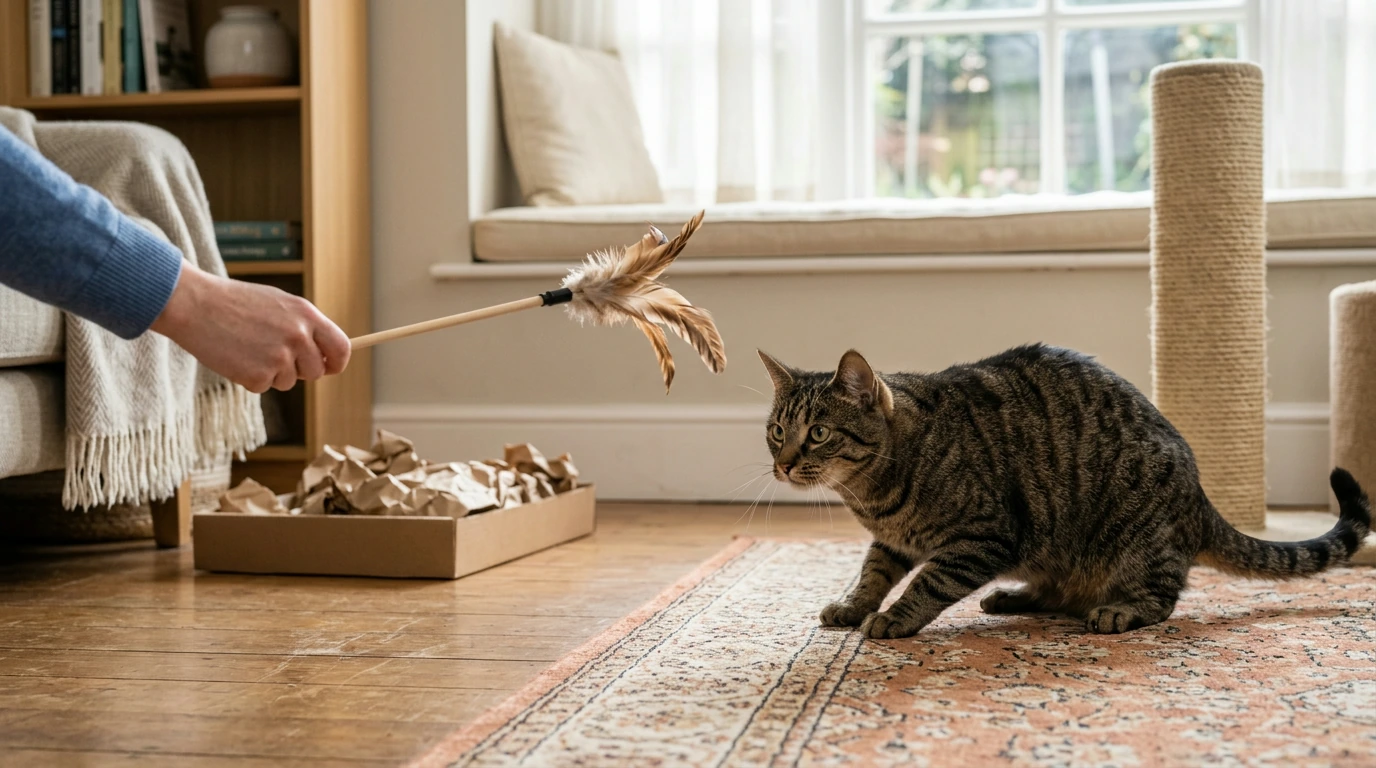
Most “behavior problems” soften when you build a complete hunting sequence into play: slow stalking, a fast chase, a real catch (let your cat win), then a small treat or meal. Wand toys, tossed toys, and a short puzzle at the end all count toward “catch and eat.”
Climb (vertical territory)
Indoor cats relax when they can get up high. A sturdy cat tree, a cleared bookcase shelf, a window perch, or wall shelves can become your cat’s patrol route. If you’re short on space, prioritize one vertical “hub” in the busiest room so your cat can be near you without needing your lap every minute.
Scratch (two zones minimum)
Plan for at least two scratch areas: one vertical and one horizontal. Place one near sleep spots (cats love a big stretch-and-scratch after a nap) and one near any “problem” scratching location to redirect without drama.
Chew & mouth (safe texture options)
Boredom biting often improves with rotating mouth-safe textures. Options can include cat grass and vet-approved dental chews, plus sturdy textured toys. Rotate weekly so your cat doesn’t get “immune” to the novelty.
Rest (protected nap zones)
Enrichment works best with predictable downtime. After play, give your cat a calm landing zone: warm bedding, low foot-traffic, and minimal surprises. If your home is busy, add one “quiet retreat” area that’s always available.
A simple indoor-cat play routine that actually sticks
Most indoor cats do better with short bursts than marathon sessions. Aim for 2–3 sessions daily (about 5–12 minutes each), using the same sequence so your cat learns what to expect:
- Warm-up: slow lure, easy wins
- Sprint: quick darts, short chases
- Catch: let your cat grab and hold the toy
- Calm-down: slower movement, fewer jumps
- Reward: a small treat or meal portion
Printable Weekly Enrichment Rhythm (mix-and-match ideas)
| Day | AM (5–10 min) | Midday (solo) | PM (8–12 min) | Wind-down |
|---|---|---|---|---|
| Mon | Wand “bird” chase + 3 treats | Window perch + 5-minute bird video | Hallway sprint game (toy toss) | Brush or quiet cuddle spot |
| Tue | Treat trail scavenger hunt | Cardboard box maze | Kicker toy + light tug | Lick mat or small meal |
| Wed | Laser (brief) → switch to physical toy to “catch” | Puzzle feeder | Wand “mouse” ground stalk | Sniff session (safe herbs/catnip) |
| Thu | Training: sit/touch/target (2–4 reps) | Paper bag peek-a-boo (handles removed) | Crinkle ball chase | Dim lights + calm music |
| Fri | Stair or cat-tree lure climbs | Toilet-paper-roll treat toy | Hide-and-seek with treats | Warm blanket nap zone |
| Sat | New toy rotation day | Bird feeder viewing spot | Interactive chase + “catch” reward | Gentle stretch/massage if tolerated |
| Sun | Short training refresh | Scent swap (new blanket) + explore | Low-energy play (slow lure) | Early bedtime routine |
DIY cat toys and enrichment you can make in minutes
Make your home cat-friendly without adding clutter
If you’re trying to make enrichment fit into a small or multi-use home, our team built Maximize Function, Minimize Clutter: Multifunctional Room Layouts eBook to help you plan zones (work, rest, pet) without the “stuff creep” that makes routines hard to maintain.
Food puzzles and foraging: turning meals into enrichment
Use the printable guide to keep enrichment consistent (even on busy days)
To make this easy to stick to, we keep our Enrichment Ideas for Indoor Cats | Printable Cat Enrichment Guide ready to print and post on the fridge or near your toy bin.
Small upgrades that support enrichment every day
Hydration and routine matter more than they get credit for. Many cats drink more when water is fresh and appealing, which supports overall comfort—an often-missed piece of enrichment. If you’re looking for a long-term home upgrade, our team stocks the Stainless Steel UV Filter Pet Water Fountain as an option for households that want a dedicated, easy-to-clean drinking station.
For further guidance beyond our routine ideas, these resources are worth bookmarking: AAFP Feline Environmental Needs Guidelines, ASPCA: Enriching Your Cat’s Life, and Ohio State University Indoor Pet Initiative (cats).
FAQ
How much play does an indoor cat need each day?
Most indoor cats do well with about 10–30 minutes total per day, split into 2–3 short sessions. Kittens and high-energy cats often need more, and the most important piece is ending with a “catch” plus a small food reward.
What are easy enrichment ideas for cats who don’t like toys?
Try food puzzles, treat scavenger hunts, window watching, scent enrichment, and gentle training games like touch/target. Also try moving a toy like real prey (slow, hiding, brief darts) and let your cat control the distance so it doesn’t feel overwhelming.
Are laser pointers okay for cat enrichment?
They can be used briefly if you always finish by switching to a physical toy your cat can catch, followed by a small treat or meal portion. Overusing lasers without a “catch” can increase frustration, so keep it occasional and mixed with other play.





Leave a comment