Improve Gas Mileage Fast: Habits, Maintenance, Checklist
Smart Ways to Improve Gas Mileage: Practical Changes That Cut Fuel Use Fast
Gas prices may change, but fuel waste is predictable: heavy acceleration, underinflated tires, extra weight, and skipped maintenance can quietly drain the tank every week. The good news is you don’t need special gadgets or complicated modifications to see improvement—just a few repeatable habits and a short checklist that keeps your vehicle running efficiently. Below, our team breaks down the biggest wins you can start using today, plus a quick reference system you can keep on your phone so the habits stick when life gets busy.
Start with the biggest wins: driving habits that save fuel immediately
If you want fast results, start with what happens under your right foot. Fuel economy is strongly affected by how quickly you ask the engine to do work, and how often you force the car to slow down and speed up again.
- Accelerate smoothly and avoid racing to the next stoplight. Hard starts are one of the quickest ways to burn extra fuel.
- Hold a steady speed whenever possible. Even small speed swings add up over longer drives.
- Anticipate traffic: lift off early and coast toward stops instead of braking late.
- Use cruise control on flat highways when conditions allow; it helps maintain consistent throttle.
- Reduce high-speed driving. Fuel economy often drops quickly above typical highway speeds due to aerodynamic drag.
- Limit idling: if stopped for longer than a brief moment, consider shutting off the engine when safe and legal.
For more official guidance on efficiency-focused habits, see FuelEconomy.gov’s driving tips.
Make the car easier to move: tires, weight, and drag
Even with perfect driving, a vehicle that’s fighting rolling resistance or wind drag will use more fuel than it needs. These checks are simple, but they matter because they work in the background every mile you drive.
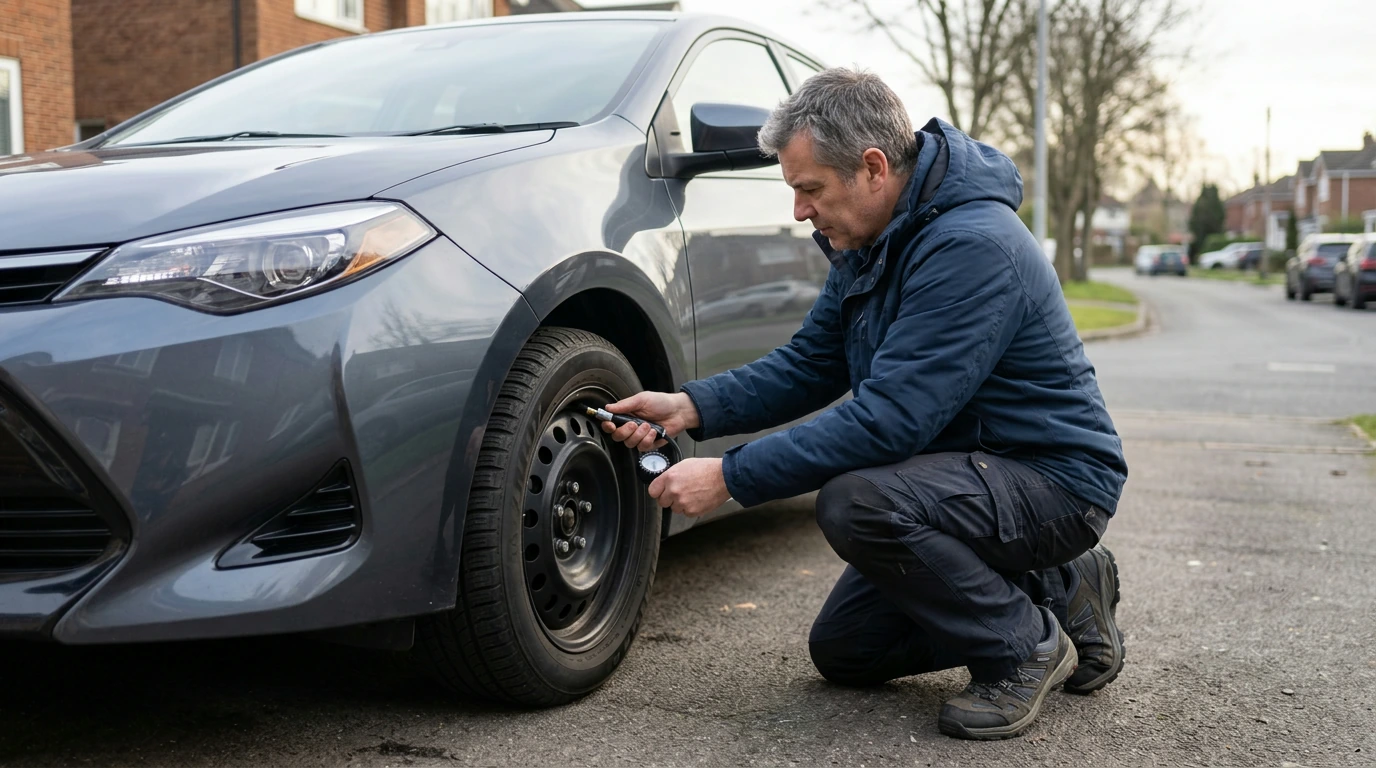
- Check tire pressure regularly and inflate to the vehicle placard recommendation (not the tire sidewall maximum). Underinflation increases rolling resistance and can reduce mileage.
- Keep wheels aligned. Misalignment makes the vehicle “scrub” speed and can wear tires early.
- Remove unnecessary cargo from the trunk and cabin; extra weight forces the engine to work harder.
- Take off roof racks or cargo boxes when not in use; added drag can noticeably reduce highway fuel economy.
- Keep windows closed at higher speeds; open windows can create drag that offsets any A/C savings on the highway.
Quick mileage checklist (fastest to verify first)
| Check | How often | Why it matters |
|---|---|---|
| Tire pressure (set to door-jamb placard) | Monthly + before trips | Lower rolling resistance, steadier handling |
| Unload extra items | Weekly | Less weight = less fuel required to move |
| Remove roof rack/box when unused | As needed | Cuts highway drag and fuel burn |
| Engine air filter (inspect/replace as needed) | Per maintenance schedule | Restriction can reduce efficiency on some vehicles |
| Oil type/level per manual | Per maintenance schedule | Correct viscosity reduces frictional losses |
| Alignment check | When tires wear unevenly or after impacts | Reduces rolling losses and tire wear |
Maintenance that protects mpg (and prevents expensive surprises)
Maintenance is where small inefficiencies hide. You might not notice a gradual dip in mpg week to week, but your budget will. Sticking to your manufacturer’s schedule is the baseline; then watch for these common mileage drains.
- Follow the manufacturer maintenance schedule; small issues can chip away at mileage long before a warning light shows up.
- Keep up with oil changes using the recommended viscosity; excessive friction reduces efficiency.
- Replace worn spark plugs (where applicable) and address misfires promptly; poor combustion wastes fuel.
- Check for dragging brakes if the car feels sluggish or wheels run hot; brake drag turns fuel into heat.
- Fix check-engine lights quickly; certain faults increase fuel use and can damage emissions components.
- Use the recommended fuel grade; higher octane than required typically does not improve mpg.
The U.S. Department of Energy also covers high-impact upkeep steps in Keeping Your Car in Shape.
Trip planning that lowers fuel costs without driving more
A/C, windows, and accessories: when comfort costs fuel (and when it doesn’t)
For additional official tips, the U.S. EPA’s gas mileage guidance is a solid reference.
Put it all together with a simple, repeatable system
Recommended reading: quick guides our team keeps within reach
- Smart Ways to Improve Gas Mileage | Practical eBook Guide on how to improve your car’s gas mileage, Save Fuel, Drive Smarter, Lower Costs — built for real-life driving with straightforward steps and reminders you can apply on your next commute.
- One Room, Real Progress: A Simple Step-by-Step Guide for Stress-Free Home Organization — a helpful complement if you’re also trying to reduce day-to-day chaos that leads to last-minute errands and extra trips.
- Maximize Function, Minimize Clutter | Multifunctional Room Layouts eBook | Small Space Design Guide | Space-Saving Furniture & Smart Home Ideas — supports a more efficient home setup so you can spend less time hunting for items and making repeat store runs.
FAQ
How much can gas mileage improve with better driving habits?
Results vary by vehicle and route, but smooth acceleration, steadier speeds, less idling, and better trip planning can create noticeable improvements over a few tanks. Track your mpg (or miles per tank) for a few weeks so you can measure what changes help the most in your specific commute.
Does premium fuel improve gas mileage?
Premium typically only benefits engines designed for it. Using a higher octane than your vehicle recommends usually doesn’t increase mpg, so you’re best off following your owner’s manual.
Should tires be inflated to the number on the tire sidewall?
No—use the vehicle manufacturer’s recommended tire pressure listed on the door-jamb placard. The number on the tire sidewall is the tire’s maximum rating, not the target pressure for your specific vehicle.







Leave a comment