Burberry-Style Loyalty: Retain Customers Without Discounts
Why Burberry-Style Loyalty Works (Even Without Constant Discounts)
Burberry’s staying power comes from something sturdier than short-term promotions: a brand identity customers can recognize instantly, stories that connect heritage to modern culture, and experiences that feel worth coming back to. Instead of training customers to wait for markdowns, the brand builds pride of ownership—then reinforces it through digital moments, retail theater, and community-driven campaigns that make customers feel like insiders.
The result is a loyalty loop: a clear identity creates trust, trust makes customers receptive to newness, and memorable experiences turn purchases into repeat behavior. That approach can be adapted by any e-commerce brand willing to treat loyalty as an experience strategy—not just a coupon strategy.
The foundation: a clear identity that shows up everywhere
Before a brand can earn repeat purchases, it has to earn recognition. Burberry’s identity operates like a system: visual cues, tone, product design, and customer experience all reinforce the same promise across every touchpoint.
- Treat brand identity as a system: symbols, tone of voice, product codes, packaging, site design, and service standards should point to one consistent idea of “what you stand for.”
- Keep heritage as a living asset: legacy elements work best when they’re updated for today’s media and culture—not trapped in nostalgia.
- Maintain recognition at a glance: consistent colors, typography, and motifs reduce friction and strengthen emotional recall.
- Use consistency to earn experimentation: when the core stays stable, collaborations and new formats feel additive rather than confusing.
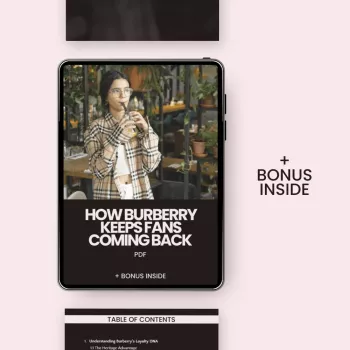
If you want a practical breakdown of how identity and experience translate into repeat buying, the downloadable guide How Burberry Keeps Fans Coming Back: A Guide to Building Loyalty & Crafting Experiences lays out the same principles as a step-by-step playbook.
Loyalty without constant discounting: value, status, and belonging
Discounting can drive transactions, but it rarely builds devotion. Burberry leans into signals that make customers feel confident they made the “right” choice—and proud to be seen with it.
- Shift loyalty from price to pride: craftsmanship narratives, thoughtful design details, and cultural relevance give customers reasons to return that aren’t tied to coupons.
- Create “member energy” without a points program: early access, curated edits, limited drops, and personalized recommendations can create the same pull as points—without turning the relationship transactional.
- Give reasons to return that aren’t product-led: editorial content, behind-the-scenes storytelling, and interactive moments keep the relationship warm between purchases.
- Reward advocacy, not just spend: spotlight customers and creators, invite participation, and make sharing feel recognized (not exploited).
Retention is often more profitable than constant acquisition; Harvard Business Review has long highlighted how keeping the right customers compounds value over time (The Value of Keeping the Right Customers).
Experience design: make the brand something customers can participate in
Burberry turns campaigns into experiences—moments customers can join, share, and remember. The key is to design engagement as a journey, not a one-day launch.
- Turn campaigns into experiences: interactive lookbooks, livestreams, behind-the-scenes content, and social-first storytelling extend attention beyond launch day.
- Design for shareability: distinctive visuals and simple story hooks help customers spread the brand organically.
- Mix digital and physical thoughtfully: use online channels to build anticipation; use retail (or elevated unboxing/service) to deepen emotion through touch and atmosphere.
- Plan the journey end-to-end: teaser → live moment → tailored follow-up (highlights, recommendations, invitations to the next drop).
Experience levers that drive repeat customers
| Loyalty lever | What it does | How to apply it in any brand | Signals to track |
|---|---|---|---|
| Heritage storytelling | Builds trust and meaning | Document origins, craft, and design decisions; create repeatable story formats | Branded search, direct traffic, time on site, saves/shares |
| Access and exclusivity | Creates urgency and status | Early access, limited runs, invite-only drops, VIP previews | Waitlists, repeat purchase rate, drop participation |
| Community activation | Strengthens belonging | Creator features, UGC prompts, local events, ambassador programs | UGC volume, referral traffic, community growth |
| Personalization | Reduces choice overload | Guided quizzes, style edits, targeted follow-ups, replenishment reminders | CTR, conversion rate, repeat purchase interval |
| Retail theater + service | Turns shopping into memory | Appointments, styling sessions, premium packaging, repairs/care | NPS, appointment booking rate, returns rate |
| Cultural collaborations | Keeps the brand current | Partner with artists/brands that match values and audience overlap | New customer share, earned media, follower growth |
Personalization that feels premium (not intrusive)
Done well, personalization can materially lift performance; McKinsey summarizes how “getting personalization right” creates measurable business impact (The value of getting personalization right).
Retail and service: the experience after checkout is the loyalty engine
A practical playbook to adapt Burberry-style loyalty to any brand
For a structured, ready-to-implement version of this playbook, explore How Burberry Keeps Fans Coming Back: A Guide to Building Loyalty & Crafting Experiences. If your team also needs practical systems for planning and execution, One Room, Real Progress: A Simple Step-by-Step Guide for Stress-Free Home Organization and Maximize Function, Minimize Clutter offer clear frameworks for building routines—useful for turning “we should do loyalty” into repeatable operating habits.
Recommended reading
FAQ
How can a brand build loyalty without relying on discounts?
Focus on identity, service, and belonging so customers return for pride and recognition, not price. Replace frequent markdowns with early access, personalized support, high-quality content, and memorable moments that feel exclusive.
What types of experiences most often drive customers to return?
Experiences that reduce friction (personalized guidance), increase belonging (community participation), and add status (exclusive access) tend to create repeat behavior. Pair a standout live moment with a thoughtful post-purchase journey.
Which metrics best show whether loyalty is improving?
Track repeat purchase rate, repeat purchase interval, cohort retention, and customer lifetime value trends. Add customer-led growth signals like direct traffic growth, referrals/UGC volume, and service satisfaction measures such as NPS.



Leave a comment