AI Pet Care Planning: Health Tracking & Daily Routines

Using AI for Smarter Pet Care Planning: Health Monitoring and Personalized Routines for Modern Pet Owners
Modern pet care has more moving parts than ever—nutrition, exercise, enrichment, training, grooming, medication, vet visits, and the daily “did we already do that?” moments. AI can’t replace a veterinarian or hands-on observation, but it can make planning easier: turning scattered notes into a consistent routine, flagging patterns you might miss, and helping every caregiver stay aligned. Below is a practical, low-friction way to use AI for pet care planning—especially for health tracking and personalized routines—without overcomplicating the basics that keep pets thriving.
Start with the non-negotiables: what “good care” looks like for your pet
Before you ask AI to organize anything, decide what must happen no matter how busy the day gets. When you define those “minimums,” your routine becomes resilient instead of fragile.
- Define daily essentials: meals (type and portions), fresh water access, potty schedule or litter maintenance, movement (walks/play), and downtime.
- Capture weekly and monthly needs: grooming, nail trims, ear/teeth checks (as advised), parasite prevention schedule, and supply restocks.
- Document medical “musts” in one place: diagnoses, allergies/sensitivities, medication names/timing, and vet instructions so every caregiver can follow the same plan.
- Decide what you want help with: reminders, routine design, symptom journaling, behavior pattern spotting, or caregiver handoffs.
For pet health basics and when to seek care, reputable references like the American Veterinary Medical Association (AVMA) and American Animal Hospital Association (AAHA) can help you ground your plan in vet-aligned guidance.
Set up an AI-ready pet profile (the inputs that make outputs useful)
AI is only as helpful as the details you give it. Our team recommends one profile per pet, written in plain language, stored somewhere easy to update (notes app, shared document, or a dedicated tracker).
- Core details: species, breed (if known), age, weight, activity level, diet type, and household context (kids, other pets, work schedule).
- Constraints: food intolerances, mobility limits, anxiety triggers, training goals, and any vet guidance on exercise or weight management.
- Simple trackable signals: appetite, water intake changes, stool quality, energy level, itchiness, coughing/sneezing, sleep/restlessness.
- Baseline week first: log “normal” days so future changes can be compared to your pet’s typical pattern.
Simple health and routine signals to track (and how often)
| Signal | Why it matters | How to log it | Suggested frequency |
|---|---|---|---|
| Meals and treats | Supports weight management and allergy troubleshooting | Portion + time + any new foods | Daily |
| Water intake | May signal heat, diet changes, kidney/urinary issues, or dehydration risk | Refills per day or estimated amount | Daily |
| Stool/urination notes | Early clue for GI upset, parasites, stress, or urinary concerns | Quick rating (normal/soft/diarrhea) + frequency | Daily |
| Energy and mobility | Highlights pain, overexertion, stress, or aging changes | 1–5 score + short note | Daily |
| Skin/ears/itch | Helps identify flare patterns (seasonal, food, environment) | Severity score + trigger guess | 2–3x/week |
| Weight | Tracks progress toward healthy body condition | Scale weight (same conditions) or vet weigh-ins | Monthly (or as advised) |
| Medication/supplements | Prevents missed doses and duplicate dosing across caregivers | Checklist with time given | Per dose |
Build personalized routines with AI (without making life rigid)
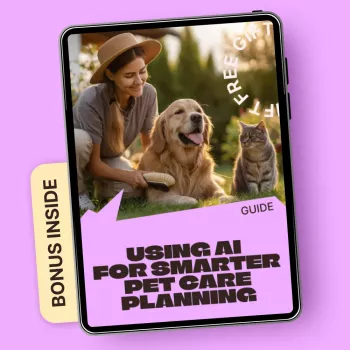
If you want a done-for-you framework you can personalize quickly, our team built Using AI for Smarter Pet Care Planning – Practical Guide to ai pet care planning, Health Monitoring & Personalized Routines for Modern Pet Owners to help you set up profiles, templates, and tracking without turning pet care into a second job.
Use AI for smarter health monitoring: patterns, prompts, and prep for the vet
For medication and animal health literacy resources, the FDA’s Animal & Veterinary consumer information is also a helpful reference point when you’re double-checking terms, labels, and general safety basics.
Connect the routine to the home: reduce friction with simple systems
If your pet care station tends to spread into clutter, One Room, Real Progress: A Simple Step-by-Step Guide for Stress-Free Home Organization can help you set up a small, sustainable home system that supports the routine instead of fighting it.
And for pets who do better with circulating water, our team also stocks the Stainless Steel UV Filter Pet Water Fountain—a practical option when you’re trying to keep water access consistent across long workdays and multi-caregiver households.
A practical week-one plan (quick setup, real momentum)
Go deeper with a step-by-step guide built for modern pet owners
If you want a more complete workflow—pet profiles, routine templates, health tracking structure, and practical ways to use AI without overwhelm—start with Using AI for Smarter Pet Care Planning – Practical Guide to ai pet care planning, Health Monitoring & Personalized Routines for Modern Pet Owners. The goal isn’t perfection; it’s consistency and earlier awareness when something changes.
FAQ
What’s the safest way to use AI for pet health monitoring?
Use AI to organize what you observe—logs, summaries, and timelines—so you can spot changes sooner and communicate clearly with your veterinarian. Set vet-approved thresholds for urgent signs, and contact a veterinarian promptly when symptoms are severe, sudden, or persistent. AI should not be used to diagnose or choose treatments.
What should be included in an AI-generated daily routine for a dog or cat?
Include essentials first: meals, fresh water, potty breaks or litter care, activity/play, and rest. Add optional blocks like enrichment, short training sessions, and light grooming so you can scale up on good days without failing the routine on busy ones. Using separate weekday/weekend templates helps the plan match real life.
How do multiple caregivers share an AI pet care plan without mix-ups?
Use a shared checklist and keep one “source of truth” for feeding and medication with time-stamped confirmations. Standardize one daily handoff note that covers meals, bathroom notes, meds, and anything unusual. A dedicated pet care station reduces missed steps by keeping supplies in one predictable place.





Leave a comment