3.8cm Men’s Leather Belt with Copper Buckle: Fit & Style
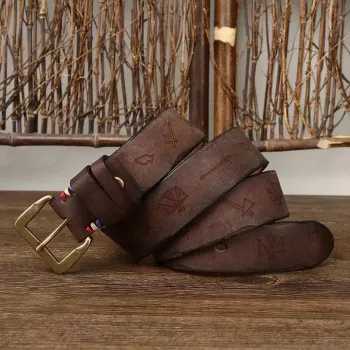
Men’s 3.8CM Genuine Leather Belt with Copper Buckle
A well-made leather belt is one of the simplest ways to pull an outfit together—especially when the hardware has character. This 3.8cm belt pairs genuine leather with a copper buckle for a grounded, heritage look that works with denim, chinos, and everyday workwear while offering a comfortable width for most belt loops.
What Makes This Belt Stand Out
- 3.8cm width for a balanced profile that looks right at home with jeans and many casual-to-smart casual trousers.
- Genuine leather strap designed to flex comfortably while maintaining structure through daily wear.
- Copper buckle adds a warm, confident accent that pairs naturally with browns, indigo denim, and earthy color palettes.
- Easy to dress up or down: wear it with boots and a button-down for a sharper finish, or keep it relaxed with sneakers and a tee.
Materials and Hardware: Leather Strap + Copper Buckle
Genuine leather has a lived-in quality that’s hard to replicate. Over time, it typically softens, gains subtle character, and shows natural variation that makes the belt feel more personal rather than “brand new” forever. If you like accessories that look better the more you wear them, leather is a dependable choice.
The copper buckle is the detail that changes the whole mood. Copper’s warm tone brings depth to simple outfits and can evolve with wear. Depending on exposure to air, moisture, and friction, copper may develop a gentle patina over time—one reason many people prefer it over cooler-toned hardware. For a quick reference on copper’s properties, see the Royal Society of Chemistry’s copper overview.
To keep the finish consistent, wipe the buckle after humid days, workouts, or rain. If you prefer a more rugged, vintage-leaning look, letting copper age naturally can add exactly the kind of character that makes a belt feel “earned,” not just worn.
Fit and Sizing: Getting the Right Length
A belt should feel secure without fighting you. The most comfortable fit usually lands on the middle hole, leaving enough tail to tuck neatly into the first loop without wrapping halfway around your waist. If the belt is too long, the tail can bunch or flare; if it’s too short, the buckle can sit off-center and feel restrictive when seated.
As a practical starting point, choosing a belt that’s 1–2 inches larger than your trouser waist measurement often works well. If you’re between sizes, sizing up is typically easier to live with—extra length is manageable, while a belt that’s too short is frustrating from day one.
Quick Fit Guide (Reference)
| Measure | How to Take It | Helpful Tip |
|---|---|---|
| Trouser waist | Use the labeled waist size on the pants or measure around where the belt sits | Belts often wear best when they buckle near the center hole |
| Existing belt length | Measure from the buckle pin to the most-used hole | Match this measurement for the closest fit |
| Belt width | Confirm loop width on jeans/chinos | 3.8cm suits many denim loops; slimmer dress pants may prefer narrower belts |
Styling Ideas: Casual, Workwear, and Smart-Casual
- Denim and boots: Combine dark denim with a flannel or chore jacket and brown boots. The copper buckle reads classic and sturdy without looking heavy.
- Chinos and loafers: Copper hardware adds warmth to khaki or olive chinos, especially with a tucked-in Oxford or knit polo.
- Monochrome outfits: Black or charcoal basics can look sharper with copper as a subtle focal point—noticeable, not loud.
- Matching approach: Coordinating belt leather with your shoes is a clean move, but exact matching isn’t required. Let the copper echo other warm metals (watch case, bracelet details) for an intentional finish.
Care and Longevity
Leather rewards basic, consistent care. Wipe the strap with a dry or slightly damp cloth and avoid soaking it. When the leather feels dry or stiff—especially in low-humidity climates—use a small amount of leather conditioner to support suppleness. For broader leather care guidance, the Leather Conservation Centre shares helpful fundamentals.
Storage matters more than most people think. Hanging the belt or laying it flat helps reduce unwanted creases. Rotating between belts (even just alternating days) can keep the leather from being stressed in the same bend points continuously.
If the copper buckle dulls, buff it with a soft cloth. If you choose to use a metal polish, apply carefully and keep it off the leather to avoid staining or residue.
When a 3.8cm Belt Is the Right Choice
Product Snapshot
Title: Men’s 3.8CM Genuine Leather Belt with Copper Buckle
Price: $43.67 (USD)
Availability: In stock
Best for: daily outfits, denim, chinos, and warm-toned accessories
| Detail | Value |
|---|---|
| Width | 3.8CM |
| Strap material | Genuine leather |
| Buckle | Copper |
| Price | 43.67 USD |
| Stock status | In stock |
More In-Stock Finds
- Maximize Function, Minimize Clutter | Multifunctional Room Layouts eBook | Small Space Design Guide | Space-Saving Furniture & Smart Home Ideas
- One Room, Real Progress: A Simple Step-by-Step Guide for Stress-Free Home Organization
FAQ
Is a 3.8cm belt too wide for most pants?
3.8cm commonly works well for jeans and many chinos because their belt loops are typically built for sturdier widths. Some dress trousers have narrower loops, where a slimmer belt may fit and look better.
Will the copper buckle change color over time?
It can. Copper may darken slightly or develop a natural patina depending on wear, humidity, and exposure to sweat or rain; wiping it dry helps slow changes, while gentle polishing can brighten it again.
How should a belt fit when fastened?
A comfortable belt usually fastens on the middle hole with the buckle centered and the tail sitting neatly past the first belt loop. For the easiest sizing check, measure an existing belt from the buckle pin to the hole you use most often and compare.





Leave a comment