Stress Teeth Grinding Relief: 5-Min Reset + Sleep Plan

The stress–grinding loop: why the jaw takes the hit
Teeth grinding can feel random—until you notice the pattern: bigger stress, tighter jaw, worse sleep, more soreness the next morning. When you’re under pressure, your nervous system shifts into “guarding” mode. Shoulders creep up, breathing gets shallow, and the jaw often joins the brace-up response.
For many people, bruxism (grinding or clenching) shows up during sleep because your brain keeps processing stress signals even while your body is resting. The result can be morning jaw fatigue, headaches at the temples, tooth sensitivity, tight neck/shoulders, and sleep that feels less restorative.
The goal isn’t perfect relaxation. It’s reducing how often and how hard you clench so your jaw muscles—and your teeth—can recover.
| Pattern | When it shows up | What it feels like | First habit to try |
|---|---|---|---|
| Daytime clenching | Work, commuting, screens, conflict | Teeth touching, tongue pressed, tight cheeks | Set “lips together, teeth apart” check-ins every 2–3 hours |
| Nighttime grinding | During sleep, especially after stressful days | Morning jaw fatigue, temple headache | Wind-down routine + jaw release before bed |
| Stress flare-ups | Deadlines, travel, big life changes | Sudden increase in soreness or sensitivity | Temporarily simplify routines; add extra decompression breaks |
| Caffeine/fatigue overlap | Poor sleep, late coffee, overstimulation | Restless sleep, clenched waking moments | Move caffeine earlier; add a short evening “downshift” ritual |
Quick self-check: what’s driving the tension right now
If you want faster relief, aim for accuracy over willpower. A few small observations can show you what to adjust first.
- Time-of-day tracking: Note when clenching peaks—meetings, driving, scrolling, late-night work, or right before sleep.
- Body-map scan: Check whether your jaw tightness travels with raised shoulders, shallow breathing, or a tense stomach.
- Habit triggers: Gum chewing, nail biting, leaning your chin on your hand, and posture strain can keep jaw muscles “on.”
- Sleep disruptors: Alcohol close to bedtime, late caffeine, and irregular schedules can increase nighttime grinding risk for some people.
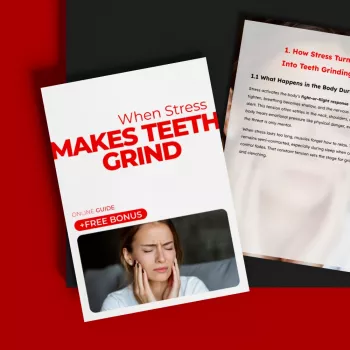
If you’d like a structured plan you can follow without overthinking, our team built When Stress Makes Teeth Grind – A Practical Guide Exploring the Teeth Grinding Stress Link for Jaw Relief, Calm Nights & Better Daily Habits to turn these patterns into simple, repeatable steps.
Jaw relief in 5 minutes: a reset routine for tense days
This is our “do it anywhere” reset. Keep it gentle—your jaw responds better to consistent, low-force input than to aggressive stretching.
- Unclench cue: Rest your tongue lightly on the roof of your mouth behind your front teeth; let your teeth separate. (Think: lips together, teeth apart.)
- Breath downshift (60 seconds): Inhale through your nose, then exhale a little longer than you inhaled. A longer exhale signals safety to the nervous system.
- Masseter release (60–90 seconds): With clean hands, gently massage the cheek muscle in small circles. Avoid pressing hard or pushing into sharp pain.
- Neck/shoulder support (2 minutes): Do slow shoulder rolls, light chin tucks, or use a warm compress to reduce “upstream” tension feeding the jaw.
Consistency beats intensity. During stressful weeks, repeat once mid-day and once in the evening—especially before dinner or your nightly routine.
Calmer nights: building a wind-down that actually reduces grinding
A calmer night starts before you’re exhausted. A short, repeatable “off-ramp” helps your body exit alert mode.
For a deeper clinical overview of symptoms and treatment options, you can also reference the National Institute of Dental and Craniofacial Research (NIDCR) bruxism resource or the Cleveland Clinic overview on bruxism.
Better daily habits: a low-pressure plan for the next 14 days
If your stress load is being amplified by a crowded environment, pairing a jaw plan with a simple home reset can help your nervous system stay steadier. Our team’s reader-favorite is One Room, Real Progress: A Simple Step-by-Step Guide for Stress-Free Home Organization. If you need a more layout-focused approach (especially in small spaces), Maximize Function, Minimize Clutter | Multifunctional Room Layouts eBook supports daily flow so you’re not unconsciously bracing all day.
Using the guide as a toolkit (not another task on the list)
If you want the whole process laid out in a single, easy-to-follow format, our team created When Stress Makes Teeth Grind to help you move from “white-knuckling relaxation” to a calm, repeatable routine.
FAQ
Can stress really cause teeth grinding even if it never happened before?
Yes. Stress increases nervous-system arousal and muscle tension, and new or heavier life stressors can trigger clenching or grinding patterns even if you’ve never had them before. If you notice new jaw soreness, headaches, or tooth sensitivity that doesn’t improve, it’s worth getting evaluated.
How long does it take to feel jaw relief once habits change?
Some people notice improvement within a few days when daytime clenching drops, especially with frequent “teeth apart” check-ins. More durable changes often take 2–4 weeks of consistent routines, and results can vary based on sleep quality, caffeine timing, and overall workload.
When should a dentist or doctor be involved?
Get professional support if you notice cracked or chipped teeth, worsening sensitivity, severe or frequent headaches, jaw locking/clicking with pain, facial swelling, major sleep disruption, or signs of sleep apnea. A dentist can discuss protective options like a night guard, and a doctor can help assess sleep or medical contributors when appropriate.






Leave a comment