Healthy Meal Planning: 1-Week or 1-Month Plan That Sticks
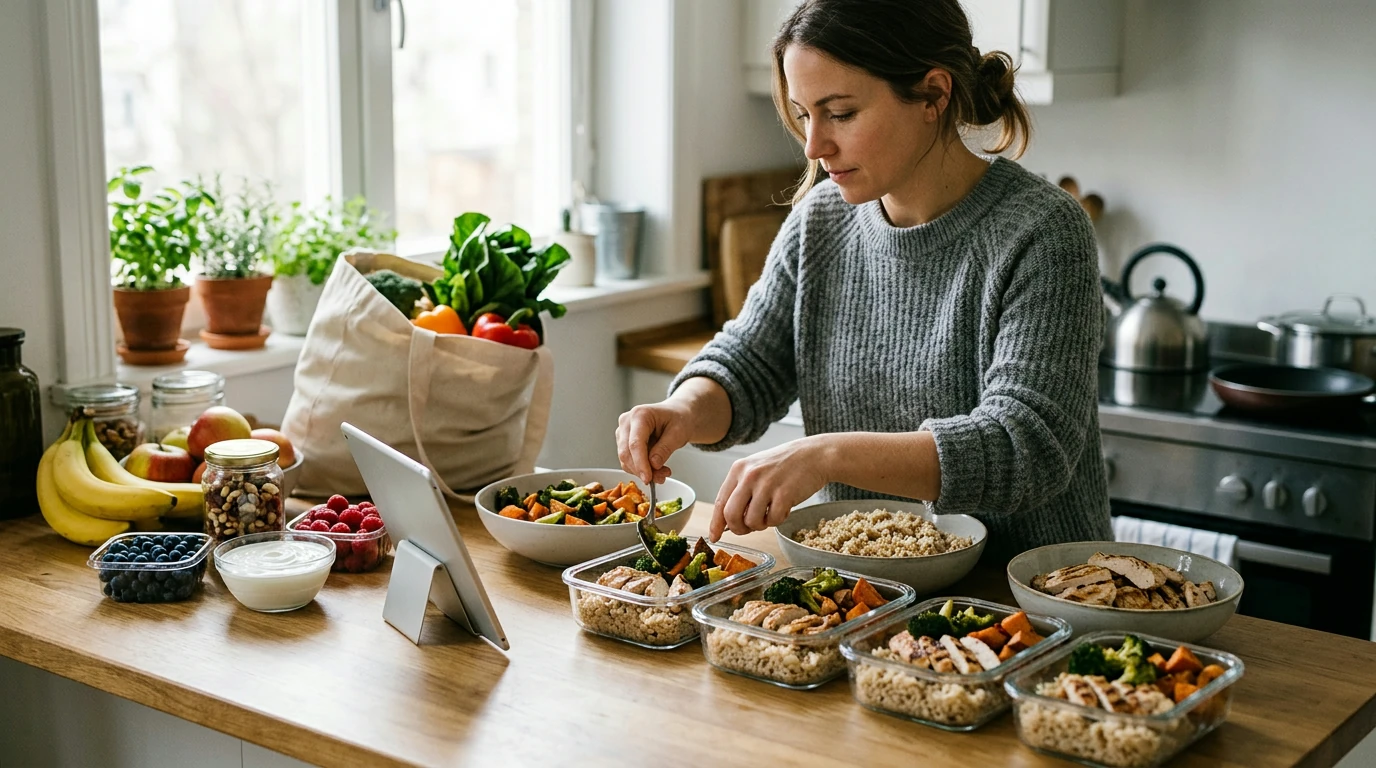
Healthy Meal Planning That Actually Sticks
Healthy eating gets hard when decisions pile up: what to cook, what to buy, how to keep meals balanced, and how to avoid falling back on the same few options. Our team built the Healthy Meal Plan & Recipe Collection eBook to remove that daily friction with a structured one-week or one-month routine covering breakfast, lunch, dinner, and snacks—so your meals feel steady, satisfying, and realistic to follow.
If you want a simple rhythm you can repeat (without eating the same thing on loop), this is the kind of plan that turns “What’s for dinner?” into “Already handled.”
What this meal plan solves (and why consistency gets easier)
- Cuts decision fatigue by mapping meals ahead of time—no last-minute guessing at 5 p.m.
- Creates balanced days (meals + snacks) so your energy feels more even across the morning, afternoon, and evening.
- Supports smarter grocery shopping by reducing random add-ons and “backup” purchases.
- Makes repeating the process easier week after week, because you’re not starting from scratch.
- Keeps portions and variety in check by rotating across breakfasts, lunches, dinners, and snacks.
For evidence-based guidance on building a balanced plate, you can also reference the USDA MyPlate Plan and the Harvard Healthy Eating Plate.
What’s inside the Healthy Meal Plan & Recipe Collection
- Two planning horizons: a one-week option for fast resets and a one-month option for longer momentum.
- Full-day coverage: breakfast, lunch, dinner, and snacks—so nutrition isn’t left to chance between meals.
- Built-in variety cues: a structure that encourages rotation across proteins, fiber-rich carbs, healthy fats, and produce.
- A repeatable framework: once the rhythm feels familiar, swapping meals is straightforward without breaking the balance of the week.
- Digital format: quick access while cooking, shopping, or planning.
If you’re building healthy routines at home beyond the kitchen, our team also keeps two practical eBooks in stock that pair well with meal planning: One Room, Real Progress: A Simple Step-by-Step Guide for Stress-Free Home Organization and Maximize Function, Minimize Clutter. A calmer space makes it easier to keep prep tools, pantry items, and grab-and-go snacks where you can actually find them.
How to choose: one-week vs one-month (and how to mix both)
Both options are designed to feel doable. The difference is how much “automation” you want up front.
Quick decision guide
| If the priority is… | Best fit | Why it works |
|---|---|---|
| Getting started without overwhelm | One-week | Short runway, faster feedback, quick wins |
| Reducing planning time long-term | One-month | Fewer decisions, steadier routine |
| Flexibility around changing schedules | One-week (repeatable) | Easy to adjust week-to-week |
| Building consistency with meals + snacks | One-month | Full-day structure becomes automatic |
- Choose the one-week plan when you’re starting fresh, returning from travel, or resetting after a busy stretch.
- Choose the one-month plan when you want fewer planning sessions and a more “set it and follow it” routine.
- Use one week as a trial run to learn pacing, portions, and prep time before committing to a full month.
- Mix-and-match by repeating a strong week twice, then swapping in new meals for weeks 3–4.
- Schedule a 10–15 minute weekly check-in to confirm ingredients, adjust leftovers, and match your calendar.
A simple way to keep meals balanced all day
- At main meals: build a balanced plate—vegetables + protein + quality carbs + healthy fats.
- At snacks: use them as support, not filler—pair protein or fat with fiber to stay satisfied longer.
- Keep hydration and timing steady to reduce “mystery hunger” that’s really fatigue or dehydration.
- Rotate colors and food groups across the week to avoid the “same meal, different container” effect.
- Plan for real life: include at least one low-effort meal for your busiest day.
If weight goals are part of your plan, the CDC’s healthy eating guidance can help you keep expectations realistic and routine-focused.
Meal prep that doesn’t take over the weekend
- Try “prep-lite”: wash/chop produce, cook one protein, prep one grain, and portion two snacks.
- Choose 1–2 versatile bases (roasted vegetables, cooked rice/quinoa, shredded chicken/beans) that flex across meals.
- Keep flavor boosters ready: lemon/lime, herbs, salsa, yogurt-based sauces, spice blends.
- Use leftovers on purpose: plan at least one lunch that converts dinner leftovers into tomorrow’s meal.
- Store smart: label containers by day or meal so weekdays feel frictionless.
Customization without breaking the plan
Getting started in 20 minutes
When you’re ready to put structure behind your day-to-day meals, start with our Healthy Meal Plan & Recipe Collection eBook—and if your kitchen (or schedule) feels cluttered, pairing it with One Room, Real Progress can make follow-through noticeably easier.
FAQ
Is the one-month plan too strict if schedules change?
No—our month plan is a structure, not a trap. You can swap meals within the same category (breakfast for breakfast, dinner for dinner), lean on leftovers when the week gets hectic, or repeat a strong week whenever life crowds your calendar.
How does the plan help with balanced nutrition across the day?
It builds your day around breakfast, lunch, dinner, and planned snacks, so you’re not trying to “catch up” later. Using a balanced plate approach at meals and protein-and-fiber-based snacks helps support steadier energy and fewer random grazing moments.
Can recipes be adjusted for different portion needs?
Yes—scaling is straightforward: add vegetables first, then protein, then carbs based on hunger and activity. The goal is to stay satisfied and consistent rather than forcing a one-size-fits-all portion.






Leave a comment