Unstick Your Home: Quick Resets, Better Flow, Less Clutter
Fresh Ideas for a Home That Feels Stuck: Simple Changes That Create Real Momentum
When a home feels stuck, it’s rarely about needing a full renovation. More often, it’s a handful of friction points—clutter “hot spots,” awkward layouts, stale routines, and rooms that aren’t working for today’s life. The fastest way forward is a short reset that delivers visible wins, then builds on them with small, repeatable upgrades that make the space feel lighter, clearer, and easier to live in.
Spot the “stuck” signals (and pick the smallest lever)
Start by noticing the repeat frustrations: the pile that rebuilds itself on the counter, the chair that becomes a clothing rack, the drawer that jams, the room everyone avoids. Those are “stuck” signals—proof that the current setup requires too much effort to maintain.
Next, identify the main cause behind the mess (not the symptom). Most homes are stuck for one of four reasons: too much stuff, not enough homes for items, an inefficient layout, or weak daily reset habits. Choose one lever for the week—one surface to clear, one bottleneck to fix, or one routine that touches multiple rooms—and make sure the progress is visible in 20 minutes. Momentum matters more than perfection.
The 30–60 minute reset: one surface, one zone, one win
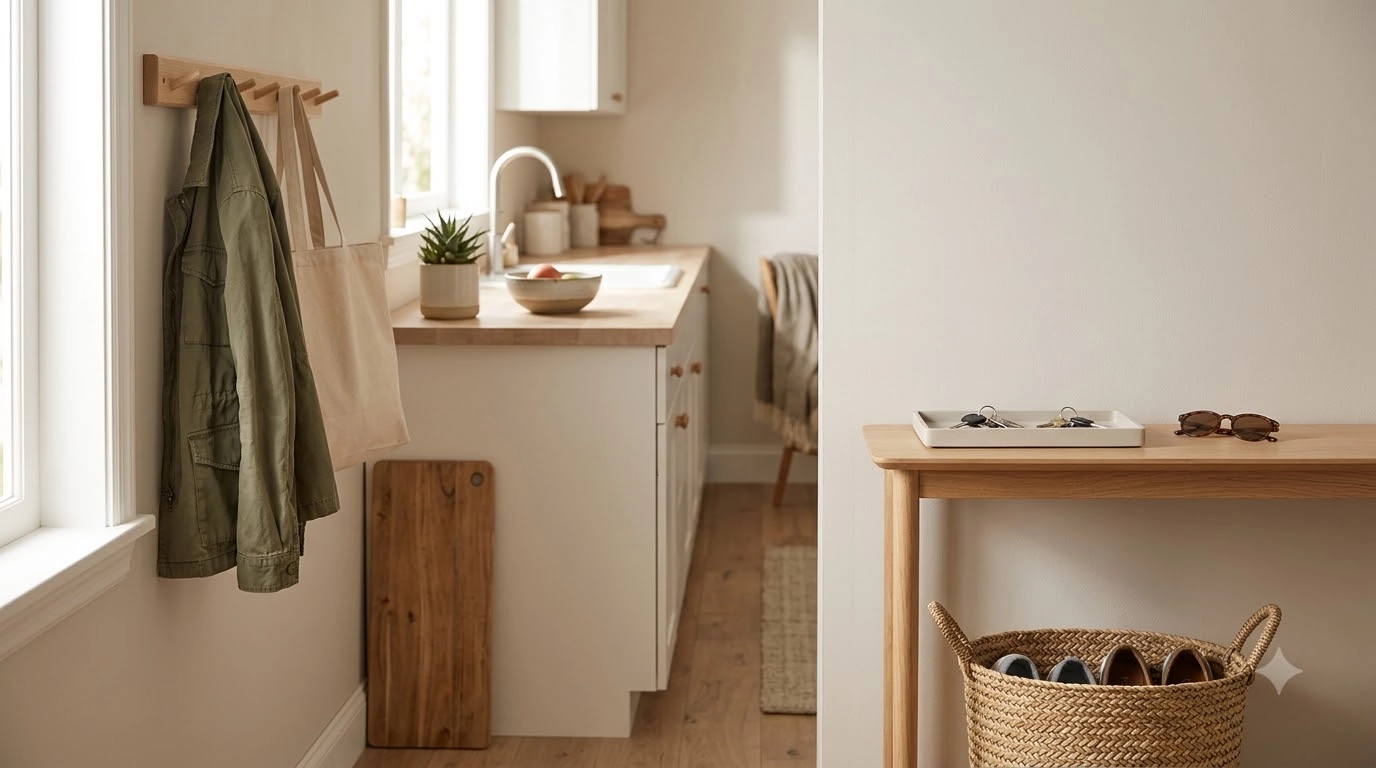
If you only do one thing today, pick the “landing strip” that collects everything: an entry table, the kitchen counter, or that one bedroom chair. Clear it completely, wipe it down, and only return what truly belongs there. Then add a micro-system that prevents the pile from rebuilding: one tray, one basket, or one hook rail.
To keep the win from vanishing, add a tiny “closing shift” habit: five minutes at night to return items to their homes. If you get stuck on decisions, use a temporary bin labeled “Decide Later,” but give it a seven-day deadline so it doesn’t become permanent storage.
Quick fixes for common stuck points
| Stuck point | Fast fix (10–20 min) | Longer fix (30–60 min) | What it changes |
|---|---|---|---|
| Entry clutter | Add a bowl/tray for keys + a hook for bags | Create a drop zone: hooks, shoe mat, small basket | Reduces daily friction leaving/arriving |
| Kitchen counter piles | Remove duplicates and relocate rarely used items | Assign zones: prep, coffee, mail; add a small inbox | Keeps counters usable and calmer |
| Bedroom feels chaotic | Clear one nightstand and limit items to essentials | Create a laundry rhythm + add a hamper where clothes land | Improves rest and morning flow |
| Living room feels heavy | Remove 5 decorative items and store extras | Rebalance furniture to open a clear pathway | Makes the space feel larger and easier |
| Paper overload | Gather paper into one box | Set up a 3-folder system: Action / File / Recycle | Stops paper from spreading room to room |
Rework flow: make moving through rooms feel effortless
A home feels “stuck” when movement feels annoying—detours around furniture, nowhere to set things down, and storage that’s technically available but inconvenient. Check your main pathways first. A clear 30–36 inch route where people naturally walk is a practical target; if a side table forces a shoulder-check, it’s not a “space issue,” it’s a placement issue.
Refresh without remodeling: light, color, and “one statement change”
Refresh is about clarity, not churn. One of the fastest upgrades is lighting consistency: matching bulb temperature within a room makes the space feel intentional and calmer. Light affects daily life in real ways, including alertness and comfort; the CDC offers a helpful overview of how lighting influences well-being and work environments at CDC/NIOSH.
Edit the clutter that keeps returning
Rebound clutter isn’t a willpower problem; it’s a category problem. Work in the groups that cause repeat mess: cords, mail, pantry items, kids’ papers, toiletries, and the “misc.” drawer. Use a simple threshold: keep what is used weekly, loved, or truly necessary; move the rest into a donate box immediately. Research has linked cluttered home environments with higher stress in some households; the American Psychological Association discusses the relationship between clutter and well-being at APA.org.
Build a home that stays unstuck: routines that take less than 10 minutes
A guided shortcut for faster results
If decision fatigue is what’s keeping your home stuck, a structured plan can help you move faster with fewer false starts. For a full momentum boost, explore the Fresh Ideas for a Home That Feels Stuck – 3 in 1 Digital Bundle, designed to pair quick wins with repeatable systems.
If you want a smaller starting point, One Room, Real Progress: A Simple Step-by-Step Guide for Stress-Free Home Organization is a focused way to turn a single room into visible progress. And if layout friction is the main issue—small space, multi-use rooms, awkward traffic flow—Maximize Function, Minimize Clutter | Multifunctional Room Layouts eBook supports smarter zones and furniture placement so your home works the way you actually live.
FAQ
What’s the fastest way to make a home feel less stuck in one day?
Clear one high-visibility surface completely, add a simple catch-all system (tray, basket, or hooks), and do a five-minute evening reset so clutter doesn’t rebound overnight.
How can a small space feel bigger without buying a lot?
Open the main pathways, reduce visual clutter by grouping small items, use consistent lighting in each room, and define zones with a rug or lamp instead of adding furniture.
How do you keep progress from disappearing after a weekend reset?
Match storage to real habits (where items naturally land), use container limits to prevent overflow, and rely on tiny daily/weekly routines that take under 10 minutes to maintain.




Leave a comment